



Storage of "Leftover Wine"
In our ABC wine guide we talked about storage in large retail chains, we helped you step by step with reading the label and making decisions, opening the wine and choosing the right glass; but what should you do to store "leftover wine"?
We at WineatWine believe the best solution is always to finish the bottle, but when needed there are some precautions that aim to "extend the life" of an already opened product.
The main enemy of our wine is oxygen, which is responsible for oxidation that alters its aromas and flavors.
Storing an opened wine is possible, but there are obviously "limit" timeframes within which you should finish the leftovers; this is because the process of oxidation and acetification is unstoppable.
Our goal will therefore be to limit contact with oxygen and the effects of oxidation.
Let's debunk the myths right away: the teaspoon stuck in the neck of the bottle is practically useless!
A good system is to purchase an airtight stopper, easy to find and not very expensive.

In the absence of this tool, it is advisable to adapt the cork removed at the time of opening – resin stoppers work well, while cork ones are more difficult to reuse.
The top solution in this field would be to get a vacuum pump
The only effective method is to get a "wine-saving vacuum pump" like this one:
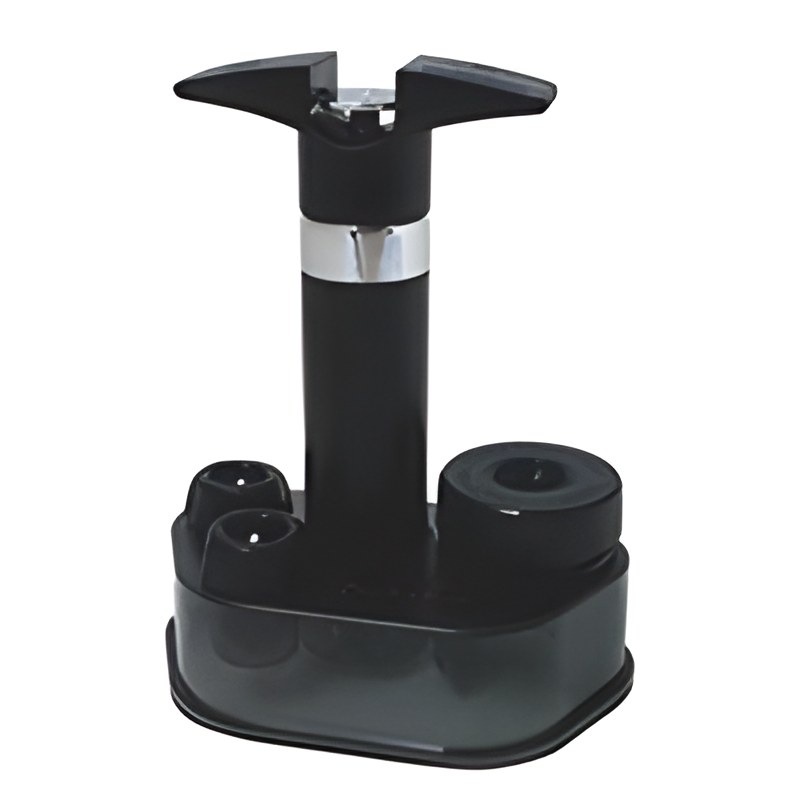
This tool has the function of drawing out all the air from the half-empty bottle, eliminating oxygen and limiting oxidation and the consequent deterioration of the remaining wine; be careful, however, as the vacuum effect lasts a maximum of two days.
Once the pump is used, it is removed and only the universal stopper included with it remains, which will seal the bottle through a depressive effect.
Be careful though – if we were to use suction on sparkling wines we would certainly end up "killing them." That is why the tool comes with a selector that also allows you to create "overpressure" inside the bottle, ensuring that the carbon dioxide responsible for effervescence remains in the bottle.
Every wine is different, so here are some ad hoc tips for the product you intend to store:
Vini bianchi
Vini bianchi are very delicate; they should be stored in the fridge for a maximum of 3 days, away from heat sources and other odors present in the fridge. The ideal would be to store them in a temperature-controlled wine cooler.
Vini rossi and dessert wines
Vini rossi and dessert wines are more resistant than vini bianchi; store them in a dark place and if it is winter, refrigeration is not necessary.
For all types, the tips mentioned at the beginning of the article still apply.
Were you unable to preserve the wine? Well then, let's see how to repurpose leftover wine


What do you think?
Log in to leave a comment